
Substack SEO Strategy: The Reverse Search-Intent Growth Loop
Discover why I write How-to Articles to grow your Substack with Google SEO & Substack SEO using an untapped "Reverse Search-Intent" growth loop.


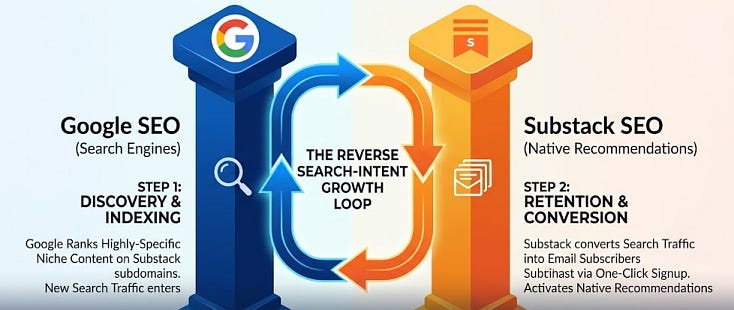
Most writers think Substack SEO and Google SEO are two completely different beasts. They assume Google is for cold, transactional search traffic, while Substack’s Notes and Recommendations are for warm, community-driven growth.
They are wrong. There’s an untapped content gap happening right now where Google’s indexing algorithm is heavily favoring high-authority Substack subdomains over traditional blogs for hyper-specific long-tail queries.
If you can bridge this gap, you can create a passive subscriber machine. That is exactly why I write How-to Articles to grow your Substack with Google SEO & Substack SEO - because combining the two distinct discovery engines creates a compounding growth loop that nobody else is talking about.
The Core Concept: The “Reverse Search-Intent” Loop
Traditional SEO tells you to find a keyword, write an article, and wait six months for Google to rank it. The Reverse Search-Intent Loop turns this upside down by using Substack’s native features to force Google to index and rank your content faster, while simultaneously triggering Substack’s internal recommendation engine.
Why This Combination Helps Your Subscriber List
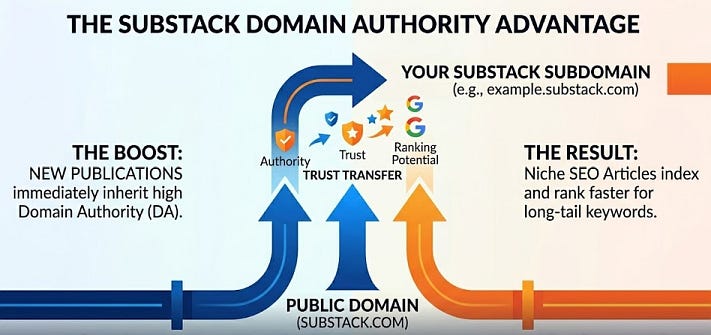
The Substack Domain Authority Advantage: New websites take years to build domain authority. Your Substack publication inherits the massive domain authority of substack.com. This allows newly published articles to rank for niche keywords in days instead of months.
The “Cross-Pollination” Effect: When a user finds your article via a Google search, they don’t just read and leave. Because you’re already on Substack, native features like one-click email subscriptions and paywalls instantly convert that cold Google traffic at a much higher rate than a standard WordPress blog.
Step-by-Step: Implementing the Growth Framework
To truly dominate this method, you must execute a dual-optimization strategy on every single piece of content you publish.
1. Optimize for Google Web Search (Technical SEO)
The URL Slug: Keep it clean and rich with your target keyword.
The First 100 Words: Google places immense weight on early-page text. This is where you declare your exact value proposition. For instance, clearly stating, “I write How-to Articles to grow your Substack with Google SEO & Substack SEO“ lets search crawlers instantly categorize your page’s exact intent.
Semantic Headers: Use Heading 2 and Heading 3 keywords to answer specific questions that people type into their search bars (e.g., “How long does it take for Substack to rank on Google?”).
2. Optimize for the “Substack Ecosystem” (On-Network SEO)
The Preview Text: This is your meta description for Google, but it also doubles as the text sent out in subscriber emails. It needs to balance search keywords with emotional click-through appeal.
Notes Injection: Immediately after publishing, take your primary keyword string, share it on Substack Notes with a link to the article, and include/tag relevant writers. This triggers immediate internal traffic, signaling to Google’s real-time ranking algorithms that the page is highly engaging.
Why The “All-in-One” SEO Strategy Wins
The writers who are struggling right now are the ones treating their newsletter like a private diary. The writers who are winning are treating their publication like a public, searchable library.
When you combine the structural power of web search with the viral loop of a newsletter platform, your growth becomes predictable. It turns from a guessing game into a repeatable science.
The Bottom Line: Don't choose between writing for Google or writing for Substack. Optimize for the platform, but write for the searcher.
If you want to stop spending tons of hours on social media, and start building an audience that finds you while they are actively looking for answers, you need a system. Implementing this specific, dual-engine framework ensures that your publication is positioned exactly where the eyes are already looking.
Paul Arino
Substack Growth Tips | How To Grow
How-to Get More Readers to Actually Open Your Email & Newsletters: Substack Welcome Email Fix and Setup
Why Substack Shows a Paywall on a Paid Subscription (and How to Fix It Instantly): Substack Paywall Paid Subscription Fix
The Substack SEO Strategy Reverse Search-Intent growth loop flips traditional content marketing on its head.
Instead of chasing high-volume keywords and hoping for organic discovery, creators analyze existing highly specific queries within their niche where searchers are explicitly looking for community hubs, curated newsletters, or trusted answers and perspectives.
By creating posts to satisfy this exact "informational curation" search intent, Substack writers convert low-volume, high-intent Google traffic into immediate email subscribers, who then share the content across social media - amplifying the platform's native recommendation network.